


You installed GitHub Copilot. Productivity went up. Job done, right?
Not quite. Most developers stop at one tool and call it an AI workflow. But that's like buying a full toolbox and only ever using a screwdriver.


Software Consulting
End-to-end software consulting services for web, mobile, and cloud-based solutions

Cloud Consulting
Architect and optimize cloud-native solutions that enhance agility, resilience, and cost efficiency.

Legacy System Modernization
Modernize legacy systems into secure, scalable, and future-ready digital platforms.

Security & Compliance Advisory
Strengthen your technology landscape by embedding security and compliance into every layer.

AI Strategy Consulting
Unlock business value by defining and implementing a clear, results-driven AI roadmap.

UI/UX Design
Design intuitive, user-centric interfaces that elevate engagement and drive measurable outcomes.

Discovery & MVP Planning
Validate product ideas and define a focused MVP roadmap that accelerates time to market.

Product Experience Design
Craft seamless end-to-end product experiences that align user needs with business goals.

Web Application Development
Build scalable, high-performance web applications tailored to your unique business workflows.

Mobile App Development
Develop intuitive, feature-rich mobile apps that deliver seamless experiences across devices.

SaaS & Platform Development
Engineer robust, extensible platforms that support growth, integrations, and evolving business needs.

API Development & Integrations
Connect systems and streamline operations by designing secure, reliable APIs and integrations.

Cloud Services
Enable agility and resilience by migrating, managing, and optimizing your cloud infrastructure.

Cloud-Native Applications
Create resilient, scalable cloud-native applications built for performance and rapid innovation.

DevOps Services
Accelerate releases and improve reliability by implementing automated, scalable DevOps practices.

Data & ML Engineering
Design and operationalize scalable data pipelines and ML systems that power intelligent decision-making.

GenAI & LLM Solutions
Develop generative AI and LLM-powered applications that automate workflows and enhance human productivity.

Conversational AI Solutions
Create intelligent conversational systems that deliver natural, context-aware customer interactions.
Agentic AI Solutions
Deploy autonomous AI agents that reason, plan, and execute complex tasks across systems.

Computer Vision solutions
Implement computer vision systems that extract real-time insights from images and video streams.

Automation Testing
Execute comprehensive manual and automated testing to accelerate releases without compromising reliability.

VAPT Testing
Optimize system performance by identifying bottlenecks and validating stability under peak loads.

Performance Testing
Identify vulnerabilities and strengthen defenses through rigorous security testing and risk assessment.
API Testing
Validate APIs for reliability, performance, and security to ensure seamless communication between systems and applications.

Software Maintenance and Support
Ensure stability and continuous improvement through proactive monitoring, maintenance, and ongoing application support.

Application Modernzation
Transform legacy applications into scalable, cloud-ready systems built for performance and agility.

Cloud Migration
Migrate applications and infrastructure to the cloud with minimal disruption and optimized performance.

Performance Marketing
Drive measurable growth by running data-driven campaigns optimized for conversions, CAC, and ROI.

SEO Services
Improve organic visibility and rankings by optimizing your content, technical SEO, and search authority.

App Store Optimization
Improve app visibility and downloads by optimizing listings, keywords, and conversion elements across app stores.

Data Enrichment
Enhance your datasets with accurate, actionable insights that improve targeting, personalization, and decision-making.

Healthcare Software Development
Build secure, compliant healthcare solutions that improve patient outcomes and streamline operations.

Healthcare Apps Development
Tailored healthcare apps built around your workflows, patients, and care delivery goals.

Telemedicine App Development
Secure virtual care platforms that connect patients and providers anytime, anywhere.
EMR/EHR Development
Intelligent EMR/EHR systems that streamline clinical workflows and improve care coordination.

Patient Engagement Solutions
Digital experiences that keep patients informed, connected, and actively engaged in their care journey.

RPM Solutions
Remote patient monitoring solutions that enable proactive care beyond hospital walls.

Home Care Software Development
Smart home healthcare platforms that simplify caregiving, scheduling, and patient management.

AI-Based Healthcare Solutions
AI-powered healthcare solutions that automate operations, enhance diagnostics, and improve patient outcomes.

SaaS Product Development
Scalable SaaS products engineered for rapid growth, seamless user experiences, and recurring revenue.

Software Modernization
Modernize legacy systems with cloud-native architectures, better performance, and future-ready technology.

Offshore Development Center
Build a high-performing offshore development team that works as a seamless extension of your business.

Hire Software Developers
Access skilled developers on demand to accelerate product delivery and scale engineering capacity.

CTO as a Service
Get strategic technology leadership and product direction without the cost of a full-time CTO.

POS Solutions
Intelligent POS solutions that streamline billing, inventory, and customer experiences across retail operations.

Custom Accounting Solutions
Tailor-made accounting software designed to simplify financial operations and improve business visibility.

Stock Trading Platforms
High-performance trading platforms built for secure, real-time, and seamless stock market transactions.

Gold Trading Platforms
Robust digital platforms for secure gold trading, portfolio management, and real-time market insights.

Insurtech Solutions
Innovative insurance technology solutions that automate processes and enhance customer experiences.

eCommerce App Development
Feature-rich eCommerce apps designed to deliver seamless shopping experiences across devices.

D2C Commerce Solutions
Direct-to-consumer commerce platforms that help brands drive engagement, loyalty, and sales growth.

Marketplace Development
Scalable multi-vendor marketplace platforms built for smooth transactions and business expansion.

Retail Software Solutions
End-to-end retail software solutions that optimize operations, inventory, and customer experiences.

Travel Application Development
Custom travel applications that simplify bookings, itineraries, and customer experiences.

Fleet & Asset Management Systems
Smart fleet and asset management systems that improve tracking, utilization, and operational efficiency

Ticketing & Fare Management
Digital ticketing and fare management solutions built for seamless payments and transit operations.

OTT Platform Development
Build feature-rich OTT platforms that deliver seamless video streaming experiences across web, mobile, and smart devices.

Live Streaming Applications
Develop scalable live streaming applications with real-time broadcasting, low latency, and interactive user experiences.

CMS Solutions
Create flexible, user-friendly CMS solutions that simplify content management and support seamless digital experiences.

CORE Banking Software
Develop secure, scalable core banking software that streamlines financial operations and enhances customer experiences.

Cloud Banking Software
Build cloud-based banking solutions that improve agility, scalability, and operational efficiency for modern financial institutions.

Loan Management Software
Create intelligent loan management software to automate lending workflows, improve compliance, and accelerate loan processing.

Inventory Management Systems
Build intelligent inventory management systems that optimize stock control, streamline operations, and reduce inefficiencies.

POS Systems
Develop reliable POS systems that simplify transactions, improve customer experiences, and support business growth.

Restaurant Management Software
Create comprehensive restaurant management software to streamline orders, inventory, billing, and daily operations.
Custom CRM Software
Design custom CRM software tailored to your workflows to improve customer engagement, sales tracking, and business efficiency.

About US
Discover who we are, what we build, and the values that drive our innovation journey.

Partnerships
Collaborate with us to create scalable technology solutions and shared business success.

Career & Culture
Build your future with a team passionate about technology, innovation, and growth.

Leadership
Meet the leaders shaping our vision, culture, and technology-driven growth

Podcasts
Explore conversations on technology, innovation, business trends, and digital transformation.

Insights Blog
Insights, trends, and expert perspectives from the world of technology and software engineering.

Corporate Social Responsibility
Driving meaningful social impact through responsible initiatives and community-focused programs.
You installed GitHub Copilot. Productivity went up. Job done, right?
Not quite. Most developers stop at one tool and call it an AI workflow. But that's like buying a full toolbox and only ever using a screwdriver.
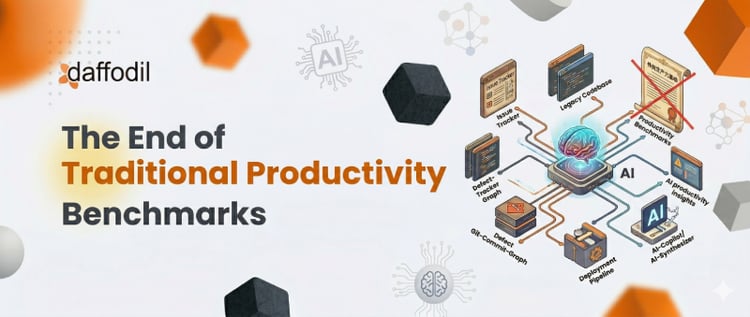
Engineering productivity used to be relatively straightforward to measure. More code written, more tickets closed, and more hours logged. These were the signals teams relied on to track progress. They gave engineering leaders a sense of control and made output visible, easy to compare, and simple to report across teams.
A technical implementation guide for designing, building, and deploying AI in healthcare without compromising patient privacy or regulatory compliance.
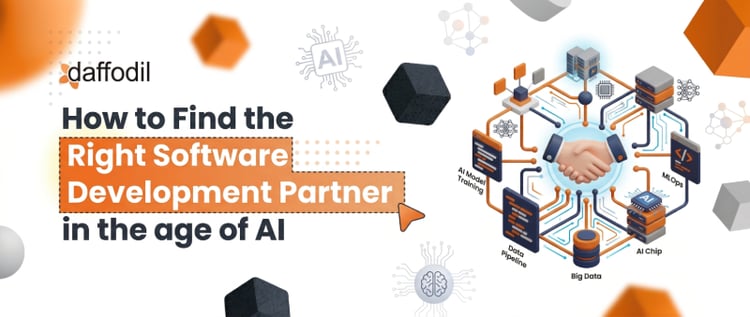
Finding a software development partner used to be about comparing hourly rates and tech stacks. But in 2026, the goalposts have shifted. We are no longer just looking for someone who can write code; we are looking for a partner who can navigate the "Intelligence Era."
If a system cannot evolve safely while running, it isn’t ready for zero-downtime migration. According to a Gartner Peer Community poll, only 58% of organizations measure the cost to recover from a technology outage, which means nearly half of businesses may not clearly quantify the financial impact of downtime when making technology decisions

Agentic AI is changing how fraud is detected. Learn what it is, why it matters, and how banks, payments, and e-commerce teams are already using it in real-world systems.
AI for UI design automation is reshaping how product teams design, validate, and ship interfaces, compressing timelines, reducing rework, and accelerating time-to-market at scale. Read more to understand how AI-driven UI design automation can help your teams ship faster.

This blog is about how vibe coding alone falls short in production systems, and why context-aware AI, with strong governance and architectural discipline, is key to reliable, scalable software.
.webp?width=750&height=321&name=How%20to%20develop%20a%20platform%20like%20Polymarket_1%20(1).webp)
If you want to build a cryptocurrency-based prediction market like Polymarket, you’ve come to the right place. In this guide, we cover everything you need to build a Polymarket clone, from market mechanics and architecture to smart contracts, compliance, and scalable deployment.




A CMMI level 3 Company
.webp)