

In the space of software development, maintaining clear, up-to-date, and interactive documentation is highly important. This is where application programming interfaces (APIs) play a crucial role.
What are Self-Documenting APIs: Beyond OpenAPI Specs
By Kunwar Jolly on Jan 21, 2025 12:09:20 PM
15 Ways to Save Cloud Costs in Generative AI Applications
By Neha Dhiman on Jan 10, 2025 12:40:25 PM
As per a report by Markets & Markets, the Cloud AI Market is growing rapidly with projections indicating a valuation of USD 274.54 billion by the year 2029, growing at a CAGR of 32.37%. A key driver of this growth is Generative AI, which is taking center stage in a variety of applications.
In general, AI models with their core in Gen AI, attract high cloud costs as they require a large amount of computation power to keep them running. Hence, there arises a need for business leaders to manage and optimize these expenses wisely.
Let’s peek into how adopting cloud cost optimization techniques can ensure the long-term success of your Gen AI-based applications and ways to do so.
Everything You Should Know About Synthetic Data in 2025
By Kunwar Jolly on Jan 8, 2025 5:30:00 PM
Synthetic data is a term that's been buzzing around the tech world, especially in discussions about AI. So, what exactly is it?
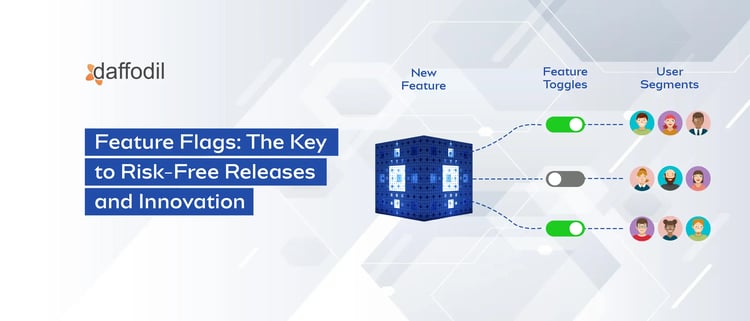
All About Feature Flags: The Key to Risk-Free Releases and Innovation
By Neha Dhiman on Dec 20, 2024 12:00:00 PM
In 2023, Netflix rolled out its new ‘Profiles’ feature where users could add up to 5 other users to the same subscription. This feature, considering its large-scale impact, was not rolled out for all users at once. Instead, they leveraged “Feature Flags”, or “Feature Toggles” to release the feature to a small subset of its users, that too in a phased manner. This gave Netflix the freedom to optimize user experience based on real-user feedback and the flexibility to switch off the toggle in case something didn’t go right.
While there are many other instances of how organizations are leveraging feature flags, it’s important to have a clear picture of what Feature Flags really are. Which is exactly what we’ll be discussing in the blog today.
All You Need To Know About Composable Architecture
By Neha Dhiman on Dec 11, 2024 10:31:21 AM
Businesses today are relying on software tools more than ever. From project management to communication to customer relationships, this reliance on applications is an increasing trend. So much so that companies use an average of 371 applications per year & counting. As organizations deal with such high application overload, there arises a need for a flexible and modular approach.
Organizations are in need of efficient tools that scale, integrate, and adapt to their technological infrastructure minus the burden of technical debt. Here’s where the role of composable architecture becomes crucial.
DesignOps: Closing the Gap Between Design & Development
By Rashi Chandra on Dec 5, 2024 11:10:17 AM
Any successful product development process relies on the alignment between design & development. When these teams aren’t aligned, even the most brilliant design concepts can fall short during the development phase which can lead to delays and costly reworks. DesignOps emerges as a remedy to address this issue effectively. Being a tech leader, you know that optimizing collaboration across teams is very important to stay competitive. This is where DesignOps comes in. By implementing structured processes, tools, and workflows, DesignOps makes sure that the design concept is translated seamlessly into the final product. It reduces obstacles, improves cross-team collaboration, and ultimately accelerates time to market.
API-First Development: The Key to Building Scalable Applications
By Neha Dhiman on Dec 2, 2024 10:38:05 AM
As organizations shift towards more integrated and agile practices, one approach has emerged as a key enabler of success: API-First Development. This strategic methodology prioritizes the design and development of application programming interfaces (APIs) before any other aspect of software development. By placing the API at the forefront, organizations can improve collaboration among development teams, enhance user experiences, and create much more reliable and scalable software architectures.
What are AI Agents? Types, Features & Real-Life Examples
By Neha Dhiman on Nov 26, 2024 2:59:51 PM
Microsoft's announcement about 10 autonomous AI agents has stirred waves in global markets, sending a signal to others to usher in the race.
To no surprise, the AI agents market is projected to skyrocket from USD 5.1 billion in 2024 to a significant USD 47.1 billion by 2030. This rapid growth is not just a sign of a passing trend; it's an indicator of a profound shift in how we approach automation, decision-making, and even creativity.
Twice as Smart: All You Need to Know About Digital Twins
By Rashi Chandra on Nov 11, 2024 3:45:00 AM
Imagine having a replica of your car - a digital twin that can carry out all the functions of your actual car. This computerized model enables you to virtually drive your vehicle, explore its workings and even test out repairs or enhancements, all conveniently from your computer or mobile device. By experimenting with this twin, you can discover the methods to maintain your car, enhance its performance and identify potential issues before they escalate into real concerns. This digital companion acts as a tool that empowers you to oversee and upkeep your vehicle. Essentially a digital twin resembles owning a virtual version of your car that presents opportunities to enhance both your driving experience as well as vehicle maintenance.
10 Gen AI Tools to Create Synthetic Data
By Neha Dhiman on Sep 28, 2024 11:00:00 AM
Imagine trying to solve a jigsaw puzzle without all the pieces. Won’t be possible, right? While you might be able to make some progress, you won’t be able to finish. Synthetic data is like having all the pieces of the AI puzzle with you - right at your fingertips. It lets you build and fine-tune your models minus the real-world data limitations. Think of it as a flexible way to train your algorithms with vast amounts of artificial data that closely resembles the real one. Plus, it also helps you sidestep privacy challenges, security risks, and high costs that come with getting access to real-world data.